
Understanding the Federal Food, Drug, and Cosmetic Act (FD&C Act) for Skincare and OTC Brands

Introduction
The Federal Food, Drug, and Cosmetic Act (FD&C Act) stands as a cornerstone of consumer protection, ensuring the safety and efficacy of products that impact the lives of millions. For skincare and over-the-counter (OTC) brands, mastering the nuances of this legislation is not merely a regulatory obligation; it is a pathway to cultivating consumer trust and brand integrity.
However, navigating the complexities of compliance can be daunting. Distinguishing between cosmetics and drugs, adhering to labeling requirements, and making accurate product claims present significant challenges.
How can brands effectively align their marketing strategies with these stringent regulations while safeguarding their reputation and avoiding legal pitfalls? This article will explore these critical issues and offer actionable insights for effective compliance.
Overview of the Federal Food, Drug, and Cosmetic Act (FD&C Act)
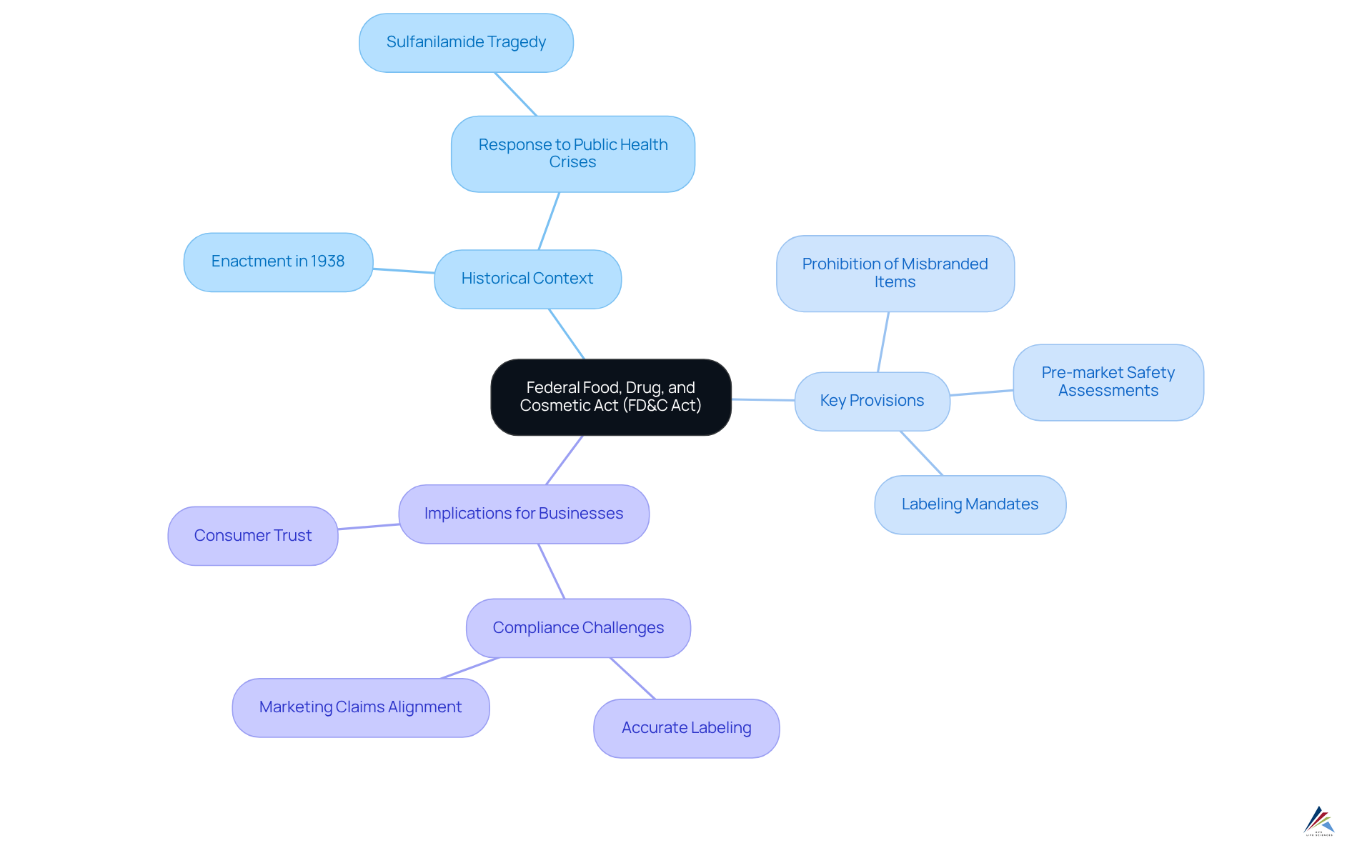
The (FD&C Act), enacted in 1938, stands as a pivotal piece of legislation that empowers the FDA to oversee the safety and efficacy of food, drugs, and cosmetics. This Act emerged in response to critical public health crises, notably the sulfanilamide tragedy, underscoring the .
Key provisions of the FD&C Act include:
- The requirement for
- The prohibition of
- The establishment of
For skincare and OTC brands, (fd&c act) is essential to effectively and . As emphasized by FDA officials, adherence to the FD&C Act is crucial for and maintaining trust in the marketplace.
In 2025, the FDA continues to assert its authority over food, drugs, and cosmetics, reinforcing the importance of compliance in an evolving industry landscape. Businesses often face , such as accurately labeling products and ensuring that marketing claims align with FDA regulations, which can lead to serious legal repercussions if not managed appropriately.
Distinctions Between Cosmetics and Drugs Under the FD&C Act
Under the FD&C Act, the distinction between is primarily determined by the intended purpose of the product. Cosmetics are defined as items intended for:
- Cleansing
- Beautifying
- Enhancing attractiveness
- Modifying appearance without affecting the body's structure or functions
Conversely, drugs are characterized as substances intended for use in:
- The
- Cure
- Mitigation
- Prevention of disease
For example, a moisturizer that claims to hydrate the skin is categorized as a cosmetic; however, an item that claims to treat acne is classified as a drug. Understanding the (FD&C Act) for skincare and OTC brands is crucial for brands to avoid and ensure that their with their classifications.

Labeling Requirements for Skincare and OTC Products
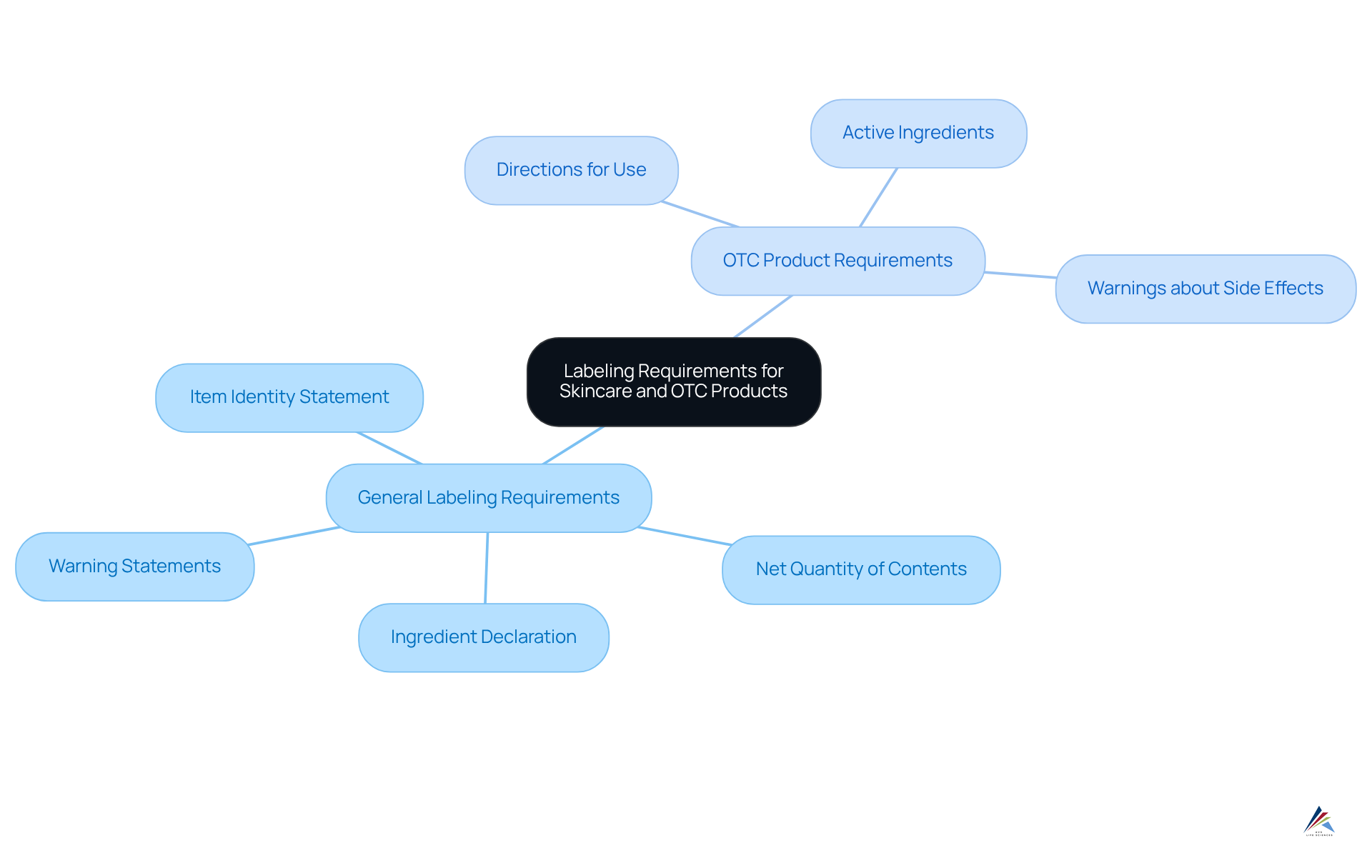
Understanding the (FD&C Act) for skincare and OTC brands requires that all cosmetic and OTC items must feature precise and honest labeling. Key include:
- The item's identity statement
- Net quantity of contents
- Ingredient declaration in descending order of predominance
- Any necessary warning statements
Understanding the federal food, drug, and cosmetic act (FD&C Act) for skincare and OTC brands includes additional stipulations for OTC products such as:
- Directions for use
- Active ingredients
- Specific warnings about potential side effects
Brands must ensure their labels are devoid of , as such misrepresentation can lead to from the . Adhering to these not only guarantees compliance but also fosters and enhances brand reputation.
Regulatory Implications of Product Claims and Marketing Strategies
Understanding the (FD&C Act) for skincare and OTC brands is essential when meticulously crafting and to . Brands should avoid claiming that their products can treat or prevent diseases unless classified as drugs and having undergone the necessary FDA approval process. can lead to enforcement actions, including warning letters from the FDA or FTC.
To mitigate these risks, brands must focus on substantiating their claims with and ensuring that their marketing materials accurately reflect the intended use of their products. Brands can enhance their credibility and avert potential by aligning with regulatory requirements while also understanding the for skincare and OTC brands.
This proactive approach not only safeguards against regulatory pitfalls but also builds trust with consumers, ultimately fostering a more resilient .

Conclusion
Understanding the Federal Food, Drug, and Cosmetic Act (FD&C Act) is essential for skincare and over-the-counter (OTC) brands striving to excel in a highly regulated landscape. This foundational legislation not only protects consumer health but also establishes a framework that brands must navigate to ensure compliance and uphold market trust. The FD&C Act's provisions, including pre-market safety assessments and labeling mandates, are crucial for brands to comprehend as they develop their products and marketing strategies.
Throughout this article, we have highlighted key points, including:
- The critical distinctions between cosmetics and drugs
- The stringent labeling requirements for skincare and OTC products
- The regulatory implications of product claims
By grasping these elements, brands can sidestep common pitfalls and align their marketing efforts with FDA regulations, ultimately enhancing their credibility and consumer trust.
As the landscape of skincare and OTC products continues to evolve, it is imperative for brands to remain vigilant and proactive in their compliance efforts. Embracing the principles outlined in the FD&C Act not only protects consumers but also cultivates a reputable brand image. By prioritizing regulatory adherence and transparency, brands can navigate the complexities of the industry and contribute to a safer marketplace for all.
Frequently Asked Questions
What is the Federal Food, Drug, and Cosmetic Act (FD&C Act)?
The FD&C Act, enacted in 1938, is a pivotal piece of legislation that empowers the FDA to oversee the safety and efficacy of food, drugs, and cosmetics.
Why was the FD&C Act created?
The FD&C Act was created in response to critical public health crises, particularly the sulfanilamide tragedy, which highlighted the urgent need for stricter regulations.
What are the key provisions of the FD&C Act?
Key provisions of the FD&C Act include the requirement for pre-market safety assessments for new medications, the prohibition of misbranded and adulterated items, and the establishment of labeling mandates.
Why is it important for skincare and OTC brands to understand the FD&C Act?
Understanding the FD&C Act is essential for skincare and OTC brands to navigate the regulatory landscape effectively and ensure compliance with federal standards, which is crucial for safeguarding consumer health and maintaining trust in the marketplace.
What challenges do businesses face regarding compliance with the FD&C Act?
Businesses often face compliance challenges such as accurately labeling products and ensuring that marketing claims align with FDA regulations, which can lead to serious legal repercussions if not managed appropriately.
How does the FDA's authority relate to the FD&C Act in 2025?
In 2025, the FDA continues to assert its authority over food, drugs, and cosmetics, reinforcing the importance of compliance in an evolving industry landscape.
List of Sources
- Overview of the Federal Food, Drug, and Cosmetic Act (FD&C Act)
- news.market.us (https://news.market.us/cosmetics-statistics)
- alston.com (https://alston.com/en/insights/publications/2025/08/health-care-week-in-review-august-1-2025)
- The Ultimate List of Beauty Industry Stats (2026) (https://explodingtopics.com/blog/beauty-industry-stats)
- sidley.com (https://sidley.com/en/insights/newsupdates/2025/06/us-doj-civil-division-to-investigate-possible-violations-of-the-fdca-by-pharmaceutical-companies)
- fortunebusinessinsights.com (https://fortunebusinessinsights.com/cosmetics-market-102614)
- Regulatory Implications of Product Claims and Marketing Strategies
- POM v. FTC: A dozen quotable quotes from the D.C. Circuit opinion (https://ftc.gov/business-guidance/blog/2015/02/pom-v-ftc-dozen-quotable-quotes-dc-circuit-opinion)
- healthlawadvisor.com (https://healthlawadvisor.com/dojs-false-claims-act-recoveries-top-2-9-billion-in-fy-2024-but-health-care-numbers-dip-what-could-fy-2025-hold-for-health-care-enforcement)
- easconsultinggroup.com (https://easconsultinggroup.com/claims-substantiation-for-dietary-supplements-a-scientific-and-legal-approach)
- ftc.gov (https://ftc.gov/news-events/news/speeches/myths-half-truths-about-deceptive-advertising)
- exponent.com (https://exponent.com/article/evaluating-consumer-product-health-claims)